For home chefs who have discovered the magic of sous vide cooking, the journey to culinary excellence often hinges on one crucial tool: a reliable vacuum sealer. Achieving that perfectly cooked, impossibly tender steak or vibrant, crisp-tender vegetables starts long before the food ever hits the water bath. It begins with creating the ideal environment within the vacuum-sealed bag, locking in flavors and ensuring even heat transfer. Without a proper seal, your sous vide efforts can quickly turn into a watery disappointment or lead to undesirable textures. This guide delves into the world of vacuum sealers, specifically highlighting those best suited for sous vide, helping you navigate the options and select the perfect companion for your kitchen adventures and elevate your home cooking to restaurant-quality standards.
What is a Vacuum Sealer? Why is it Essential for Sous Vide?
A vacuum sealer is an appliance designed to remove air from a food-safe bag or container and then seal it, creating an airtight environment. This process is fundamentally about preserving food by limiting oxygen exposure, which is the primary cause of spoilage, freezer burn, and flavor degradation. The basic principle involves a vacuum pump drawing air out of the bag, followed by a heat bar that melts the bag material together, creating a permanent, hermetic seal.
For sous vide cooking, the importance of a vacuum sealer cannot be overstated. First, removing air from the bag ensures maximum contact between the food and the water bath. This direct contact is vital for the precise temperature control that sous vide is known for, allowing for incredibly even cooking from edge to edge. Secondly, a secure, airtight seal prevents any water from entering the bag during the long cooking times, which could otherwise leach out flavors and nutrients. Lastly, vacuum sealing locks in marinades and seasonings, allowing them to penetrate deeper into the food for more intense flavor profiles, an advantage impossible to achieve with conventional cooking methods. The absence of air also prevents oxidation, maintaining the food’s natural color and freshness during storage and cooking.
Types of Vacuum Sealers: Finding Your Sous Vide Match
Understanding the different types of vacuum sealers available can help you choose the best fit for your sous vide needs and kitchen setup. Each type offers distinct advantages and disadvantages in terms of cost, capacity, and functionality.
External Suction Sealers
These are the most common and popular vacuum sealers for home use due to their affordability and relatively compact size. External suction sealers work by placing the open end of a specialized textured bag onto a sealing channel or vacuum chamber on the machine. The machine then draws air out of the bag through suction, and a heating element seals the bag shut.
- Handheld Vacuum Sealers: These are typically small, battery-operated devices that use reusable, zipper-style vacuum bags or containers. While very portable and convenient for quick seals or delicate items, their vacuum power is often limited, making them less ideal for consistently tight seals required for longer sous vide cooks, especially with larger cuts of meat.
- Countertop/Domestic Vacuum Sealers: This category represents the vast majority of home vacuum sealers. They offer stronger vacuum pumps and heat bars for more reliable seals. Many models come with additional features like wet/dry settings, pulse functions for delicate foods, and integrated bag storage and cutters. These are generally an excellent choice for home sous vide enthusiasts, balancing performance with practicality. Some premium models in this category can handle wet foods effectively, which is a key consideration for sous vide marinades or juicy ingredients.
Chamber Vacuum Sealers
Chamber vacuum sealers are the gold standard for professional kitchens and serious home cooks who frequently deal with large volumes, liquids, or delicate foods. Instead of just suctioning air from inside the bag, the entire bag is placed inside a chamber, and air is removed from the entire chamber. This equalizes pressure inside and outside the bag, preventing liquids from being drawn out and allowing for perfect seals even with broths, sauces, or highly marinated foods.
- Advantages: Superior sealing for liquids, extremely robust and reliable seals, can use less expensive smooth vacuum bags.
- Disadvantages: Significantly more expensive, much larger and heavier, often overkill for casual home users. However, for those who regularly sous vide with marinades or prepare liquids, a chamber sealer offers unmatched performance.
Key Features to Consider When Choosing a Sous Vide Vacuum Sealer
Selecting the right vacuum sealer for sous vide goes beyond just pulling a vacuum. Specific features can significantly enhance your experience and the quality of your cooked dishes.
- Vacuum Power & Consistency: A powerful pump (often measured in inches of mercury or watts) ensures a strong, consistent vacuum, which is critical for preventing air pockets around food that could lead to uneven cooking. Look for machines that reviewers praise for their reliable seals, especially after repeated use.
- Wet/Dry Modes: This is arguably one of the most important features for sous vide. Many foods prepared for sous vide, such as marinated meats or delicate fish, contain moisture. A “wet” mode adjusts the sealing time and vacuum pressure to prevent liquids from being sucked into the sealing area, ensuring a clean, strong seal without damaging the machine. Some models also feature an “elevated seal bar” to help with liquids.
- Pulse Function: For delicate items like fish, pastries, or soft fruits that might be crushed by a full vacuum, a pulse function allows you to manually control the vacuum pressure. This lets you achieve just the right amount of air removal before sealing, maintaining the food’s integrity.
- Bag Compatibility & Storage: Consider the type of bags the sealer uses. Most external suction sealers require textured or embossed bags to allow air to be drawn out. Chamber sealers use smooth, cheaper bags. Some models include integrated bag roll storage and a cutter, making it convenient to create custom-sized bags, reducing waste and saving time.
- Durability & Build Quality: Sous vide often involves frequent use, so a machine with robust construction, high-quality materials, and a reliable motor will withstand the rigors of your kitchen. Read reviews for insights into long-term performance.
- Ease of Use & Cleaning: An intuitive interface with clearly labeled buttons and simple operation makes a big difference. For sous vide, it’s particularly helpful to have a removable drip tray that’s easy to clean, as moisture can sometimes accumulate.
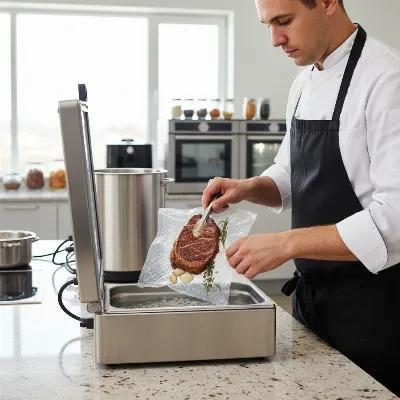 A chef vacuum sealing food for sous vide cooking
Top 5 Vacuum Sealers for Home Sous Vide Enthusiasts
Based on expert reviews and user feedback, these five vacuum sealers stand out for their performance, features, and suitability for sous vide cooking at home, catering to various budgets and needs.
1. FoodSaver V4400 2-in-1 Vacuum Sealer
-
Best Overall for Versatility and Sous Vide
The FoodSaver V4400 is a popular choice for its comprehensive features and reliable performance. It’s a 2-in-1 system that combines an automatic bag sealer with a retractable handheld sealer for canisters and zipper bags. It boasts automatic bag detection and moist/dry food settings, making it particularly well-suited for the varied needs of sous vide. Users appreciate its consistency in creating strong seals, essential for long cooking times in a water bath. The compatibility with FoodSaver’s jar sealer also offers versatility beyond sous vide.- Pros: Excellent for wet/dry foods, automatic bag detection, integrated handheld sealer, consistent reliable seals, suitable for sous vide.
- Cons: Primarily uses FoodSaver brand bags (can be slightly more expensive), larger footprint.
- Price: Mid-range to High-end.
|
Our Picks for the Best Vacuum Sealer in 2026
As an Amazon Associate I earn from qualifying purchases.
|
||
| Num | Product | Action |
|---|---|---|
| 1 | 90KPa Portable Vacuum Sealer Machine for Food, One-Touch Open Lid, Detachable & Easy to Clean, Vertical Placement Saves Space, Powerful Suction for Freezer Bags & Food Storage |

|
| 2 | Food Vacuum Sealer Machine, Powerful & Continuous Vacuum Sealing for Kitchen Storage & Meal Prep, Wet & Dry Food Sealing, Detachable Upper & Lower Design for Easy Cleaning, Includes 50 Bags |
|
| 3 | Chef Preserve Compact Vacuum Sealer for Food (Vacuum Sealer Machine + 30 Reusable Vacuum Bags) Powerful Handheld Vacuum Sealer Machine, Seal Meal Saver, Portable Food Sealer |
|
| 4 | Anybear Vacuum Sealer Machine, 90kPa 120W Wide Seal All-IN-1 Powerful Food Storage, Build-in Cutter | Bags Storage | Digital Countdown Display | 2 Bag Rolls and 5pcs Pre-cut Bags (Gray) |
|
| 5 | Nesco Deluxe Food VS-12 Vacuum Sealer, 130 Watts, Kit Bags & Viewing Lid, Compact, Silver |
|
| 6 | NutriChef Food Vacuum Sealer Machine - Automatic Air Sealing System for Dry & Moist Foods, LED Touch Controls, Includes Vacuum Bags, Hose & Wine Stopper, High Suction Power, 14"x6"x3", Silver |
|
| 7 | FoodSaver Vacuum Sealer Machine, Automatic Bag Detection, Sous Vide Friendly, with sealer bags, roll, handheld vacuum sealer, black |
|
| 8 | Mesliese Vacuum Sealer Machine Powerful 90Kpa Precision 6-in-1 Compact Food Preservation System with Cutter, 2 Bag Rolls & 5 Pre-cut Bags, Widened 12mm Sealing Strip, Dry&Moist Modes (Silver) |
|
| 9 | 95kPa Precision Vacuum Sealer Machine, Double Heat Seal for Dry/Moist Food, Easy-Lock Handle, Built-in Bag Storage & Cutter, Progress Display, Pulse Mode, Removable Drip Tray, Silver |
|
| 10 | FoodSaver PowerVac Compact Vacuum Sealing Machine Stainless Steel & Black Vertical Storage VS0150 | Preserves freshness reduces bag waste for both dry and wet food |
|
2. Nesco VS-12 Deluxe Vacuum Sealer
-
Best for Performance, Value, and Robust Features
The Nesco VS-12 Deluxe frequently earns top marks for its powerful suction and thoughtful design. With a 130-watt dual-vacuum pump, it delivers an impressive 21.0 inches of mercury, ensuring a thorough vacuum, even outperforming some commercial units in suction power. This model features wet/dry modes, a pulse function for delicate items, and a double-seal option for extra security, which is great for sous vide where bag integrity is paramount. It also includes convenient built-in bag roll storage and a cutter, along with a digital display that counts down sealing time.- Pros: Very powerful vacuum, excellent for wet/dry foods, pulse function, double-seal option, integrated storage/cutter, quieter operation.
- Cons: Some sources suggest it might not be ideal for very juicy foods without careful handling.
- Price: Mid-range.
3. Anova Culinary Precision Vacuum Sealer
-
Best for Sous Vide Specific Integration and Compact Design
From a brand synonymous with sous vide, the Anova Culinary Precision Vacuum Sealer is designed with the sous vide enthusiast in mind. It’s remarkably compact and lightweight, making it perfect for smaller kitchens. Its minimalist design features only three buttons: Vacuum and Seal, Seal, and Pulse Vacuum. The pulse option is a standout, allowing precise control for delicate ingredients. Given Anova’s expertise in sous vide immersion circulators, this sealer offers seamless integration into a sous vide workflow, ensuring your food is prepped perfectly for the water bath.- Pros: Extremely compact and lightweight, intuitive operation, excellent pulse function, ideal for delicate items, strong brand synergy with sous vide.
- Cons: May not have as many advanced features as larger models, power might be slightly less than industrial-grade options.
- Price: Entry-level to Mid-range.
4. Anova Precision Chamber Vacuum Sealer
-
Best for Professional-Grade Sous Vide with Liquids
For the serious sous vide cook who frequently prepares liquids, marinades, or large batches, the Anova Precision Chamber Vacuum Sealer is an investment worth considering. As a true chamber sealer, it excels at sealing liquid-rich foods without any mess or loss of product, creating an unparalleled airtight environment crucial for highly effective sous vide cooking. While significantly more expensive and larger than external suction models, its ability to handle wet ingredients flawlessly and use cheaper, smooth bags makes it a top choice for advanced users.- Pros: Unmatched for sealing liquids and marinades, uses cheaper smooth bags, professional-grade reliability, perfect for delicate items without crushing.
- Cons: Very expensive, large footprint, not practical for all home kitchens.
- Price: High-end (Chamber Sealer).
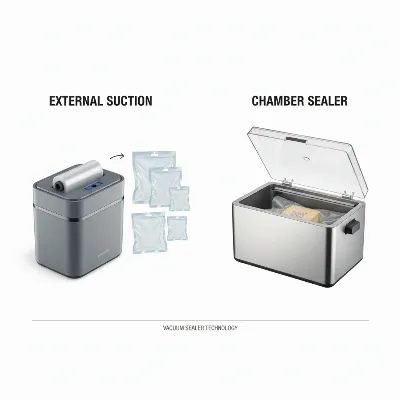 Comparison of different vacuum sealer types for home use
5. Mueller Vacuum Sealer
-
Best Budget-Friendly Option for Sous Vide Entry
If you’re new to sous vide and want a reliable vacuum sealer without a significant upfront investment, the Mueller Vacuum Sealer is an excellent entry-level choice. It’s praised for its simplicity, compact size, and consistent performance. Despite its affordable price, it effectively removes air and creates solid seals, scoring well for reliability. It features moist/dry food settings and an accessory port, offering sufficient flexibility for a range of vacuum sealing tasks. While it lacks some of the bells and whistles of more expensive models, it provides dependable sealing essential for sous vide.- Pros: Very affordable, compact, simple to use, consistent sealing, moist/dry settings.
- Cons: Lacks integrated bag cutter or roll holder, fewer advanced features.
- Price: Budget-friendly.
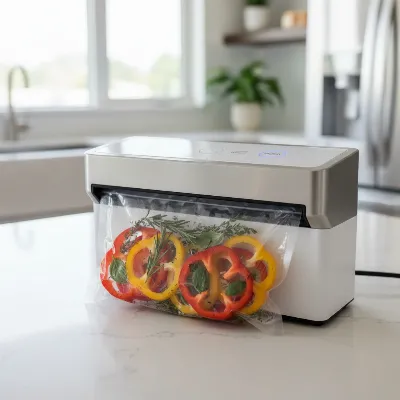 Anova Culinary Precision Vacuum Sealer sealing a bag
Mastering Your Vacuum Sealer for Sous Vide: Tips & Tricks
To get the most out of your vacuum sealer for sous vide cooking, follow these guidelines for optimal results and machine longevity.
Preparation is Key:
- Chill Liquids: If you’re vacuum sealing food with a liquid marinade or sauce, pre-chill the liquid thoroughly. This reduces the chance of it being drawn into the vacuum sealer’s drip tray before the seal is complete.
- Avoid Overfilling: Leave at least 2-3 inches of space between the food and the top of the bag for a secure, wrinkle-free seal. For very wet items, leave even more room.
- Pre-Freeze Delicate Items: For very delicate foods like soft fish or berries, a quick pre-freeze (15-30 minutes) can help them hold their shape better during the vacuuming process.
- Keep Sealing Area Clean: Ensure the part of the bag that will be sealed is dry and free of food particles or liquids. A damp or greasy sealing area can prevent a proper seal.
Choosing and Using Bags:
- Sous Vide Specific Bags: Always use vacuum sealer bags that are specifically designed for sous vide cooking. These bags are typically BPA-free and made from food-grade plastic that can withstand high temperatures for extended periods without leaching harmful chemicals into your food.
- Manual Pulse for Control: If your sealer has a pulse function, use it for delicate foods. This allows you to control the vacuum pressure manually, preventing crushing while still removing sufficient air.
- Consider Double Sealing: For extra security, especially with long sous vide cooks or valuable ingredients, consider running the sealing cycle twice on the same spot to create a double seal.
Maintenance for Longevity:
- Clean After Each Use: Especially after sealing moist foods, always clean the drip tray and sealing area of your vacuum sealer. Food particles or liquids can harden and impair future seals or harbor bacteria. Most drip trays are removable and dishwasher safe.
- Check Gaskets/Seals: Periodically inspect the foam gaskets or rubber seals around the vacuum channel. These can wear out or become compressed over time, leading to poor suction. Replace them if they show signs of damage or deterioration.
- Store Properly: Store your vacuum sealer in a dry, cool place. Some manufacturers recommend storing the lid unlatched to prevent compression of the sealing gaskets.
Common Vacuum Sealer Issues and Solutions
Even the best vacuum sealers can encounter issues. Here’s a look at common problems and how to troubleshoot them.
-
Machine Not Vacuuming or Sealing Properly:
- Check the Bag: Ensure you’re using the correct type of bag for your machine (textured for external suction, smooth for chamber). Make sure the bag is correctly positioned in the vacuum channel.
- Lid Not Latched: Ensure the lid is fully closed and latched. Some machines have indicator lights to confirm this.
- Gasket/Seal Issue: Inspect the rubber gaskets or foam seals. If they are dirty, damaged, or worn out, they won’t create a tight seal for the vacuum. Clean them or replace them if necessary.
- Overfilling: If the bag is too full, there might not be enough space for a proper vacuum or seal.
- Moisture in Sealing Area: Any moisture, food debris, or wrinkles in the sealing area can prevent a strong seal. Wipe the bag edge clean and flatten it.
-
Seal is Weak or Incomplete:
- Heat Bar Issues: The heating element might be dirty or damaged. Clean it carefully. If the seal bar is getting too hot, it can melt through the bag; allow the machine to cool down between seals if doing multiple batches.
- Bag Material: Ensure the bags are rated for your sealer. Thin or incompatible bags may not seal properly.
- Wet Foods: If sealing wet foods, ensure your machine is on the “moist” setting, or use the pulse function to control liquid draw.
-
Machine is Noisy or Overheating:
- Normal Operation: Some noise is normal during the vacuuming process, especially for powerful pumps.
- Overuse: If you’re doing many seals in a row, the machine might start to overheat. Give it a break to cool down, as continuous operation can shorten its lifespan.
- Motor Issues: If the noise is unusual or excessive, there might be a motor issue requiring professional service.
-
Bags Tearing During Vacuuming:
- Over-Vacuuming: For delicate items, a full vacuum might be too strong, causing tears. Use the pulse function to reduce pressure.
- Sharp Edges: Ensure no sharp bones or hard edges of food are pressing against the bag from the inside. Wrap these in a paper towel or extra piece of bag material to cushion them.
- Bag Quality: Inferior quality bags can be more prone to tearing. Use durable, high-quality bags designed for vacuum sealing.
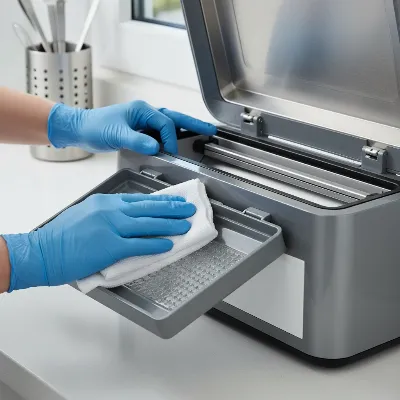 Cleaning a vacuum sealer after use
Conclusion
A high-quality vacuum sealer is an indispensable tool for anyone serious about sous vide cooking. It’s the silent partner that ensures your ingredients are perfectly prepared for the precise temperature control of the water bath, leading to consistently delicious and perfectly textured results. From extending food freshness and preventing freezer burn to locking in flavors and enabling flawless sous vide, the right machine can transform your culinary endeavors. By considering factors like vacuum power, wet/dry capabilities, pulse functions, and overall durability, you can select a vacuum sealer that perfectly aligns with your cooking style and budget. Whether you opt for a versatile FoodSaver, a powerful Nesco, a sous vide-centric Anova, or a budget-friendly Mueller, investing in a reliable vacuum sealer is an investment in better meals and smarter food management.
Which vacuum sealer feature do you find most crucial for your sous vide success?
Frequently Asked Questions
What kind of bags should I use with my vacuum sealer for sous vide?
For sous vide cooking, you should always use BPA-free, food-grade vacuum sealer bags. These bags are specifically designed to withstand the high temperatures of a water bath for extended periods without breaking down or leaching chemicals into your food.
Can I use a regular zipper bag for sous vide instead of a vacuum-sealed bag?
While it’s possible to use the water displacement method with zipper-top bags for sous vide, a dedicated vacuum-sealed bag provides a much more consistent and reliable seal, crucial for longer cooks and preventing water ingress. Vacuum sealing also ensures better food-to-water contact for even cooking.
How do I prevent liquids from being sucked into my vacuum sealer during sous vide prep?
To prevent liquids from being drawn into your vacuum sealer, ensure your machine has a “wet” food setting, which adjusts sealing time. You can also pre-chill liquids, leave ample space (2-3 inches) between the food and the bag’s top, or slightly elevate the bag opening to keep liquids away from the sealing bar.
Is a chamber vacuum sealer necessary for home sous vide?
A chamber vacuum sealer is not strictly necessary for most home sous vide enthusiasts. External suction sealers perform very well for most solid and moist foods. However, a chamber sealer is superior for vacuum sealing liquids, marinades, or very delicate items without any mess, making it a valuable investment for advanced users or those who frequently sous vide with sauces.
How often should I clean my vacuum sealer?
It’s recommended to clean your vacuum sealer’s drip tray and sealing area after every use, especially when sealing moist foods. This prevents food residue buildup, which can impair future seals and potentially harbor bacteria. Regular cleaning extends the life and efficiency of your machine.
