A vacuum sealer with a built-in bag cutter significantly extends food shelf life by removing air, preventing spoilage, and reducing freezer burn. These appliances can make groceries last five times longer, preserve flavors, and simplify meal preparation, making them an essential tool for efficient home food preservation.
What is a Vacuum Sealer? Why Do You Need One?
A vacuum sealer is an ingenious kitchen appliance designed to remove air from a package, creating an airtight seal. Its basic operating principle involves a pump that evacuates air from a specialized bag or container, followed by a heating element that seals the opening, effectively preventing air from re-entering. This process significantly extends the shelf life of food by eliminating oxygen, which is a primary cause of spoilage, bacterial growth, and freezer burn.
The benefits of using a vacuum sealer for food preservation are extensive. Firstly, it dramatically prolongs storage times for fresh meats, produce, baked goods, and pantry staples, often by several months in the freezer or weeks in the refrigerator. Secondly, by removing oxygen, vacuum sealing actively inhibits the growth of aerobic bacteria, molds, and yeasts, safeguarding your food from spoilage. Thirdly, it locks in the natural flavors, aromas, and nutritional value of food, preventing dehydration and off-flavors associated with conventional storage methods like freezer burn. Beyond food, vacuum sealers can also protect important documents, silver, emergency kits, or camping supplies from moisture and oxidation, showcasing their versatile utility.
Popular Types of Vacuum Sealers
Understanding the different types of vacuum sealers available can help you narrow down your choices, especially when considering the integrated bag cutter feature. Each type offers a unique balance of convenience, power, and capacity, making them suitable for various user needs.
- Handheld Vacuum Sealers: These are compact, often battery-operated devices designed for quick, small-scale sealing tasks.
- Advantages: Small footprint, easy to store, highly portable, and generally very affordable. They are perfect for sealing reusable vacuum-sealable containers or small bags with specific one-way valves.
- Disadvantages: Lower suction power compared to larger units, limited to specific types of bags/containers, and not ideal for high-volume sealing or liquid-rich foods. They typically do not feature built-in bag cutters.
- External Clamp Vacuum Sealers (Household/Countertop): These are the most common type for home use, designed to sit on a countertop. Food is placed in a specialized bag, which is then inserted into the machine’s sealing channel.
- Advantages: Good balance of power and price, capable of handling various food types, and many models feature robust suction and sealing capabilities. This category is where you’ll most frequently find the convenient built-in bag cutter, simplifying the process of creating custom-sized bags from rolls.
- Disadvantages: Can be larger than handheld models, requiring dedicated counter or storage space. Some models can struggle with very wet foods without pre-freezing.
- Chamber Vacuum Sealers (Commercial/High-End Home Use): Unlike external clamp models, chamber sealers place the entire bag inside a vacuum chamber before air is removed.
- Advantages: Exceptionally powerful, perfect for sealing liquids, marinades, and delicate items without crushing. They offer superior, consistent seals and are built for heavy-duty, continuous use.
- Disadvantages: Significantly larger and much more expensive than household models, making them less practical for most home kitchens. Built-in bag cutters are less common here as these machines often use pre-made bags of various sizes.
Comparison Table of Vacuum Sealer Types
| Feature | Handheld Vacuum Sealers | External Clamp Vacuum Sealers | Chamber Vacuum Sealers |
|---|---|---|---|
| Power | Low | Medium to High | Very High |
| Size | Very Small, Portable | Medium, Countertop | Large, Bulky |
| Price | Low | Medium | Very High |
| Noise Level | Low | Medium | Medium to High |
| Bag Cutter | Rarely (if ever) | Commonly Available | Less Common |
| Liquids | Not Recommended | Can be challenging (pre-freeze) | Excellent |
| Usage | Light, specific tasks | Regular home use | Commercial/Heavy-duty home use |
| Ideal For | Snacks, small containers | Bulk buying, meal prep, leftovers | Sous vide, liquids, delicate items |
Prominent brands like FoodSaver, Seal-a-Meal, Anova, and Geryon are well-represented in the external clamp category, offering a wide range of models with built-in bag cutters.
How to Choose the Right Vacuum Sealer for You
Selecting the ideal vacuum sealer requires careful consideration of several factors to ensure it meets your specific preservation habits and kitchen needs.
When buying a vacuum sealer, focus on these critical elements:
- Usage Needs: Consider what you’ll be sealing. If it’s mostly dry goods or pre-frozen meats, a standard external clamp model will suffice. For frequent liquid sealing or delicate items, a chamber sealer might be worth the investment if your budget allows.
- Budget: Prices vary significantly. Handheld models are the cheapest, while chamber sealers are the most expensive. External clamp models offer a broad range to fit most budgets.
- Size and Design: Measure your available counter space or storage area. Some external clamp models are sleek and compact, while others are bulkier.
- Suction Power and Sealing Pressure: Higher power generally means faster and more consistent vacuuming, especially for larger bags or denser foods. Check the specifications for “vacuum pressure” (measured in inches of mercury or kPa).
- Built-in Bag Cutter: This feature is invaluable for efficiency. It allows you to create custom-sized bags from rolls, reducing waste and saving time compared to using scissors. Look for models where the cutter is easily accessible and smoothly glides across the bag material.
- Additional Features:
- Pulse function: Great for delicate foods, letting you control the vacuum pressure manually.
- Moist/Dry food settings: Optimizes the seal for different food types.
- Accessory port: Allows use with external canisters or marinators.
- Removable drip tray: Essential for easy cleaning.
- Roll storage: Integrated storage for bag rolls further enhances convenience.
- Brand and Reliability: Research reputable brands known for durability and good customer service. Reading user reviews can provide real-world insights into product performance and longevity.
Expert Tip: “Always prioritize a model with a built-in bag cutter and roll storage if you plan on frequent sealing from rolls. The time and effort saved are substantial, and it streamlines your entire food preservation workflow.” – Sarah Chen, Food Preservation Specialist at HomeKitchenPro.
Before making a purchase, always read product specifications carefully and compare features across different models. Consulting user reviews from various sources can offer valuable perspectives on a vacuum sealer’s performance, ease of use, and common issues. Finally, ensure you buy from reputable retailers that offer warranty and support for your peace of mind.
Top 3 Best Vacuum Sealers with Built-In Bag Cutters
Choosing the “best” vacuum sealer often comes down to balancing performance, features, and price. Based on current market trends and user satisfaction, here are three top contenders across different price points that consistently offer reliable vacuum sealing with the added convenience of a built-in bag cutter.
1. Best Overall: FoodSaver FM5200 2-in-1 Automatic Vacuum Sealing System
|
Our Picks for the Best Vacuum Sealer in 2026
As an Amazon Associate I earn from qualifying purchases.
|
||
| Num | Product | Action |
|---|---|---|
| 1 | FoodSaver Vacuum Sealer Machine, Automatic Bag Detection, Sous Vide Friendly, with sealer bags, roll, handheld vacuum sealer, black |

|
| 2 | NutriChef Food Vacuum Sealer Machine - Automatic Air Sealing System for Dry & Moist Foods, LED Touch Controls, Includes Vacuum Bags, Hose & Wine Stopper, High Suction Power, 14"x6"x3", Silver |
|
| 3 | Mesliese Vacuum Sealer Machine Powerful 90Kpa Precision 6-in-1 Compact Food Preservation System with Cutter, 2 Bag Rolls & 5 Pre-cut Bags, Widened 12mm Sealing Strip, Dry&Moist Modes (Silver) |
|
| 4 | Chef Preserve Compact Vacuum Sealer for Food (Vacuum Sealer Machine + 30 Reusable Vacuum Bags) Powerful Handheld Vacuum Sealer Machine, Seal Meal Saver, Portable Food Sealer |
|
| 5 | Anybear Vacuum Sealer Machine, 90kPa 120W Wide Seal All-IN-1 Powerful Food Storage, Build-in Cutter | Bags Storage | Digital Countdown Display | 2 Bag Rolls and 5pcs Pre-cut Bags (Gray) |
|
| 6 | Nesco Deluxe Food VS-12 Vacuum Sealer, 130 Watts, Kit Bags & Viewing Lid, Compact, Silver |
|
| 7 | Food Vacuum Sealer Machine, Powerful & Continuous Vacuum Sealing for Kitchen Storage & Meal Prep, Wet & Dry Food Sealing, Detachable Upper & Lower Design for Easy Cleaning, Includes 50 Bags |
|
| 8 | FoodSaver PowerVac Compact Vacuum Sealing Machine Stainless Steel & Black Vertical Storage VS0150 | Preserves freshness reduces bag waste for both dry and wet food |
|
| 9 | 90KPa Portable Vacuum Sealer Machine for Food, One-Touch Open Lid, Detachable & Easy to Clean, Vertical Placement Saves Space, Powerful Suction for Freezer Bags & Food Storage |
|
| 10 | 95kPa Precision Vacuum Sealer Machine, Double Heat Seal for Dry/Moist Food, Easy-Lock Handle, Built-in Bag Storage & Cutter, Progress Display, Pulse Mode, Removable Drip Tray, Silver |
|
The FoodSaver FM5200 consistently ranks high for its innovative design and robust performance, making it a favorite for many home users. This model excels with its Express Bag Making system, which essentially cuts and seals bags for you automatically, significantly speeding up the process. 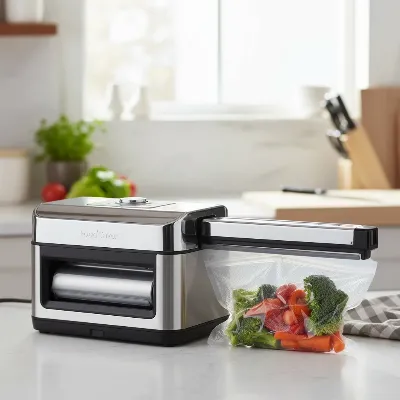 FoodSaver FM5200 2-in-1 Automatic Vacuum Sealer with built-in bag cutter and roll storage
- Pros: Patented Express Bag Maker reduces steps; built-in roll storage and bag cutter are extremely convenient; automatic bag detection; moist/dry food settings; handheld sealer for accessories.
- Cons: Higher price point; some users report a learning curve for optimal bag placement.
- Specifications: 120 Watts; compatible with 8-inch and 11-inch rolls; removable drip tray.
- Price: High-end of the household category.
2. Best Value: Geryon Vacuum Sealer Machine E5000
The Geryon E5000 is a fantastic option for those seeking excellent performance and features, including a built-in bag cutter, without breaking the bank. It offers reliable sealing for both dry and moist foods and is known for its user-friendly operation.
- Pros: Very affordable for the features offered; built-in bag cutter and roll holder; easy-to-use control panel; compact design; includes starter bags and roll.
- Cons: Suction power might be slightly less than premium models for very large batches; some components feel less durable than high-end alternatives.
- Specifications: 110 Watts; supports bags up to 12 inches wide; external vacuum function.
- Price: Mid-range/Budget-friendly.
3. Best for Heavy-Duty Home Use: Anova Culinary Precision Vacuum Sealer Pro
While often associated with sous vide, Anova’s Vacuum Sealer Pro is a powerful and reliable machine that stands out for its robust build and continuous sealing capability, making it suitable for larger households or frequent use. It includes a precise bag cutter and roll storage.
- Pros: Commercial-grade pump for continuous use; heavy-duty construction; excellent for liquids and moist foods; built-in bag cutter and roll holder; compact footprint despite power.
- Cons: Higher price; can be louder during operation compared to some lighter models.
- Specifications: 120 Watts; supports bags up to 12 inches wide; features a marinate mode and pulse vacuum.
- Price: Upper-mid range.
How to Use and Maintain Your Vacuum Sealer
Proper usage and regular maintenance are key to maximizing the lifespan and efficiency of your vacuum sealer, ensuring optimal food preservation every time.
Using Your Vacuum Sealer:
- Prepare Food: Ensure food is clean and dry. For moist foods, consider pre-freezing slightly or placing a paper towel inside the bag to absorb excess moisture near the seal area.
- Select/Cut Bag: If using a roll, extend the material and use the built-in bag cutter to create a bag of appropriate length, leaving ample space (at least 3 inches) above the food for sealing. Seal one end of the custom bag if starting from a roll.
- Fill Bag: Place food inside the bag, ensuring the top portion (where the seal will be made) is clean, flat, and free of food debris or wrinkles.
- Vacuum and Seal: Place the open end of the bag into the vacuum channel of your machine. Close the lid or engage the clamp. Select your desired setting (e.g., dry/moist) and press the vacuum and seal button. The machine will remove air and then automatically heat-seal the bag.
- Store: Label the sealed bag with the date and contents, then store it appropriately in the freezer, refrigerator, or pantry.
Maintaining Your Vacuum Sealer:
- Clean After Each Use: Always wipe down the sealing bar, vacuum channel, and drip tray after each use, especially if any food particles or liquids have made contact. A damp cloth with mild soap is usually sufficient.
- Check Gaskets: Regularly inspect the foam gaskets around the vacuum channel. Ensure they are clean, free of cracks, and properly seated, as they are crucial for creating a tight vacuum seal.
- Store Properly: Store your vacuum sealer in a dry, cool place. If it has a locking lid, store it unlocked when not in use to prevent compression of the gaskets over time, which can reduce their effectiveness.
- Replace Accessories: Replace bags and rolls as needed. If your model has a filter, check and clean or replace it according to the manufacturer’s instructions.
Common Problems and Solutions
Even the most reliable vacuum sealers can encounter occasional issues. Knowing how to troubleshoot common problems can save you time and frustration.
- Machine Not Turning On:
- Solution: Check if the power cord is securely plugged into both the machine and a working electrical outlet. Test the outlet with another appliance. Ensure any safety switches or lid latches are fully engaged.
- Machine Not Vacuuming or Sealing Properly:
- Solution: This is often due to an improper bag placement or a faulty seal. Ensure the bag opening is perfectly flat, dry, and clean within the vacuum channel, with no wrinkles or food debris. Check the foam gaskets for tears, cracks, or misalignment; replace them if damaged. Ensure enough space (at least 3 inches) is left between the food and the seal line.
- Machine Making Loud Noise, But Not Sealing:
- Solution: This typically indicates the pump is working, but it can’t create a strong enough vacuum. Re-examine the bag placement and gaskets. If using a roll, ensure the bottom seal you created is airtight. Sometimes, wet food can interfere with the vacuum; try pre-freezing or using a paper towel.
- Vacuum Seal Bag Rips During Sealing:
- Solution: This can happen if the bag material is too thin for the food’s sharp edges or if too much air is being removed too quickly for delicate items. Use thicker, puncture-resistant bags for sharp foods. If available, use a “pulse” or “gentle” vacuum setting for fragile items to prevent crushing. Ensure the bag isn’t overfilled.
By understanding these common issues and their straightforward solutions, you can keep your vacuum sealer performing optimally for years to come.
Conclusion
A vacuum sealer with a built-in bag cutter is more than just a kitchen gadget; it’s an investment in smarter food management, reduced waste, and fresher, tastier meals. From extending the life of your groceries to streamlining meal prep, the benefits are undeniable. By considering your specific needs, understanding the various types, and opting for models with convenient features like an integrated bag cutter, you can confidently choose a device that will serve your household for years.
Are you ready to transform the way you preserve food and unlock a world of culinary convenience?
Frequently Asked Questions
What is the main benefit of a vacuum sealer with a built-in bag cutter?
The main benefit is increased efficiency and reduced waste. A built-in bag cutter allows users to create custom-sized bags from rolls quickly, eliminating the need for scissors and streamlining the food preservation process.
How much longer can food last when preserved with a vacuum sealer?
Vacuum sealing can extend the shelf life of food significantly, often making groceries last five times longer. This means several months in the freezer for meats and produce, or weeks in the refrigerator for other items, compared to conventional storage.
Which type of vacuum sealer is best for home use with a bag cutter?
External clamp vacuum sealers are generally the best type for home use that commonly feature a built-in bag cutter. These countertop models offer a good balance of power, price, and convenience for various food types.
Can vacuum sealers handle moist or liquid-rich foods effectively?
External clamp vacuum sealers can handle moist foods, often requiring pre-freezing or a paper towel to absorb excess moisture. Chamber vacuum sealers, however, are exceptionally powerful and ideal for sealing liquids, marinades, and delicate items without crushing.
What are the key features to look for when buying a vacuum sealer?
When buying a vacuum sealer, key features to consider include a built-in bag cutter, roll storage, pulse function for delicate foods, moist/dry food settings, an accessory port, and a removable drip tray for easy cleaning. These features enhance usability and versatility.
How to Use and Maintain Your Vacuum Sealer
Proper usage and regular maintenance are crucial for maximizing the lifespan and efficiency of your vacuum sealer, ensuring optimal food preservation every time.
Ensure food is clean and dry; pre-freeze moist foods or use a paper towel. If using a roll, extend the material and use the built-in bag cutter to create a bag of appropriate length, leaving at least 3 inches above the food for sealing. Seal one end of the custom bag if starting from a roll.
Place food inside the bag, ensuring the top portion is clean, flat, and free of debris. Place the open end of the bag into the vacuum channel, close the lid, select your desired setting (e.g., dry/moist), and press the vacuum and seal button. The machine will automatically remove air and heat-seal the bag.
Label the sealed bag with the date and contents, then store it appropriately in the freezer, refrigerator, or pantry. Always wipe down the sealing bar, vacuum channel, and drip tray after each use with a damp cloth and mild soap, especially if food particles or liquids are present.
Regularly inspect the foam gaskets around the vacuum channel for cleanliness, cracks, or misalignment, as they are vital for a tight seal. Store your vacuum sealer in a dry, cool place, and if it has a locking lid, store it unlocked when not in use to prevent gasket compression.
Get our weekly buyer guide
Practical specs, not advice. Unsubscribe anytime.

This is my second vacuum sealer, and the built-in bag cutter is a huge improvement. No more fumbling for scissors! It does a great job of removing air and sealing everything tightly. I mainly use it for preserving garden vegetables, and it keeps them fresh for months. My only minor gripe is that it’s a bit noisy, but that’s a small price to pay for the convenience.
I got a vacuum sealer with a bag cutter to help with reducing food waste. It works pretty well for most things, especially keeping my cheeses fresh. However, I’ve had a few issues with sealing bags that have even a tiny bit of moisture on the edge, which can be frustrating. It’s still better than just using zip-top bags, but it takes some getting used to.
I’ve been wanting a vacuum sealer for ages, and finally got one with a built-in bag cutter. It’s a game-changer for meal prep! I can buy meat in bulk and seal individual portions, which really helps prevent freezer burn. My groceries are definitely lasting way longer now, probably five times longer like it said.
As someone who cooks a lot, a good vacuum sealer is essential. The one I picked up with the integrated cutter makes the whole process so much smoother. I’ve noticed a significant difference in the flavor preservation of my sous vide meats. It’s an indispensable tool for efficient home food preservation, just as described.