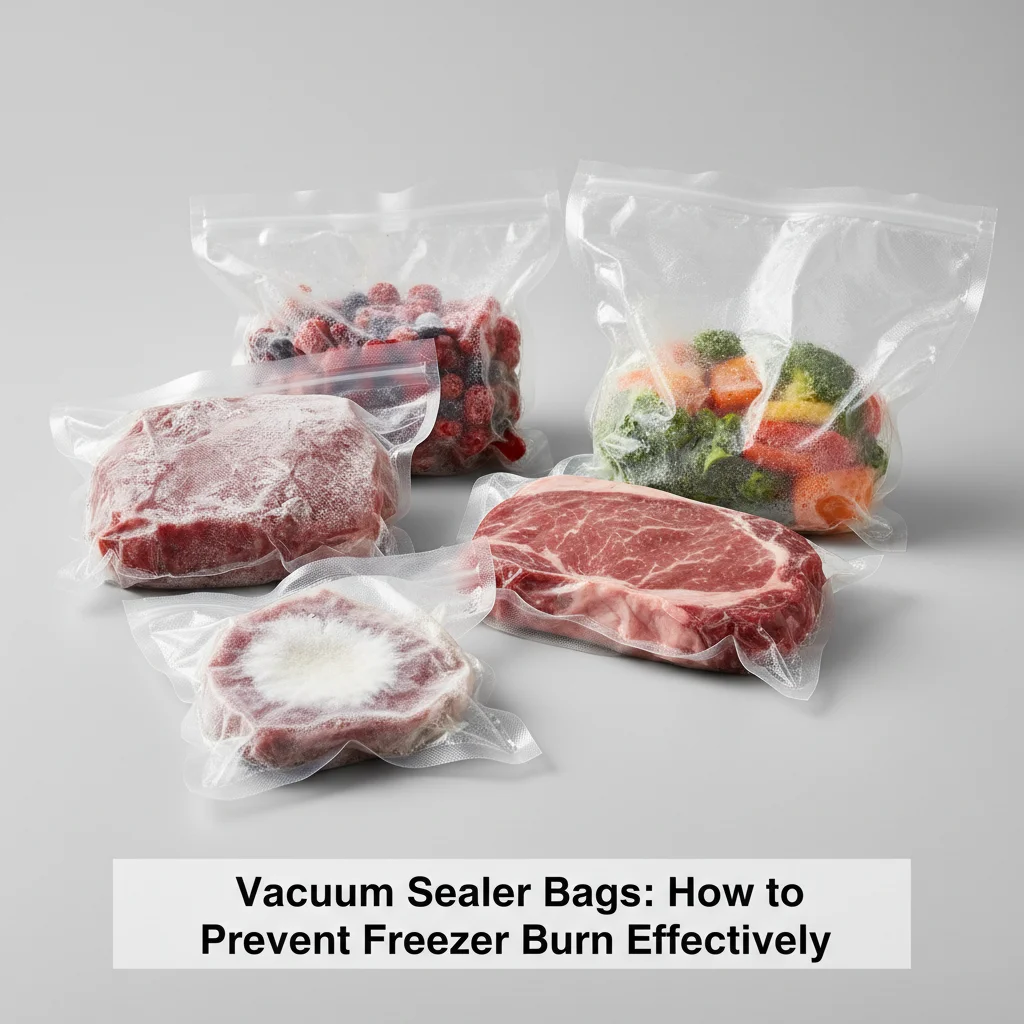
Preventing freezer burn is a primary benefit of using vacuum sealer bags for food preservation. When properly sealed, these bags create an airtight environment that significantly reduces the risk of freezer burn, keeping your food fresh and flavorful for much longer. The key lies in eliminating oxygen, which is the main culprit behind the dehydration and oxidation that cause freezer burn.
Understanding Freezer Burn and Its Impact
Freezer burn occurs when food is exposed to air within the freezer, leading to dehydration and oxidation. This exposure causes ice crystals to form on the food’s surface, drawing moisture out and resulting in dry, discolored, and flavorless patches. While freezer-burned food is still safe to eat, its quality and palatability are severely compromised. Vacuum sealing directly addresses this by removing the air that facilitates freezer burn, thereby preserving the food’s texture, taste, and nutritional value.
The Science Behind Vacuum Sealing and Freezer Burn Prevention
Vacuum sealers work by extracting air from a bag before sealing it shut. This process creates a near-vacuum environment, which is crucial for preventing freezer burn. Without oxygen, the chemical reactions that lead to oxidation are greatly slowed, and the absence of air pockets prevents moisture from sublimating (turning directly from ice to vapor) from the food’s surface. This creates a protective barrier that locks in freshness and moisture, making vacuum-sealed foods last up to five times longer than conventionally stored foods in the freezer.
Choosing the Right Vacuum Sealer Bags
|
Our Picks for the Best Vacuum Sealer in 2026
As an Amazon Associate I earn from qualifying purchases.
|
||
| Num | Product | Action |
|---|---|---|
| 1 | FoodSaver Vacuum Sealer Machine, Automatic Bag Detection, Sous Vide Friendly, with sealer bags, roll, handheld vacuum sealer, black |

|
| 2 | NutriChef Food Vacuum Sealer Machine - Automatic Air Sealing System for Dry & Moist Foods, LED Touch Controls, Includes Vacuum Bags, Hose & Wine Stopper, High Suction Power, 14"x6"x3", Silver |
|
| 3 | FoodSaver PowerVac Compact Vacuum Sealing Machine Stainless Steel & Black Vertical Storage VS0150 | Preserves freshness reduces bag waste for both dry and wet food |
|
| 4 | 90KPa Portable Vacuum Sealer Machine for Food, One-Touch Open Lid, Detachable & Easy to Clean, Vertical Placement Saves Space, Powerful Suction for Freezer Bags & Food Storage |
|
| 5 | Chef Preserve Compact Vacuum Sealer for Food (Vacuum Sealer Machine + 30 Reusable Vacuum Bags) Powerful Handheld Vacuum Sealer Machine, Seal Meal Saver, Portable Food Sealer |
|
| 6 | 95kPa Precision Vacuum Sealer Machine, Double Heat Seal for Dry/Moist Food, Easy-Lock Handle, Built-in Bag Storage & Cutter, Progress Display, Pulse Mode, Removable Drip Tray, Silver |
|
| 7 | Anybear Vacuum Sealer Machine, 90kPa 120W Wide Seal All-IN-1 Powerful Food Storage, Build-in Cutter | Bags Storage | Digital Countdown Display | 2 Bag Rolls and 5pcs Pre-cut Bags (Gray) |
|
| 8 | Mesliese Vacuum Sealer Machine Powerful 90Kpa Precision 6-in-1 Compact Food Preservation System with Cutter, 2 Bag Rolls & 5 Pre-cut Bags, Widened 12mm Sealing Strip, Dry&Moist Modes (Silver) |
|
| 9 | Food Vacuum Sealer Machine, Powerful & Continuous Vacuum Sealing for Kitchen Storage & Meal Prep, Wet & Dry Food Sealing, Detachable Upper & Lower Design for Easy Cleaning, Includes 50 Bags |
|
| 10 | Nesco Deluxe Food VS-12 Vacuum Sealer, 130 Watts, Kit Bags & Viewing Lid, Compact, Silver |
|
Not all vacuum sealer bags are created equal when it comes to preventing freezer burn. For optimal protection, it’s essential to use bags specifically designed for vacuum sealing and freezer storage. These bags are typically thicker, multi-layered, and have a textured surface on one side to facilitate air removal. Look for bags that are BPA-free and approved for food contact. Using high-quality bags ensures a strong, reliable seal that won’t compromise over time in the freezer.
- Opt for heavy-duty, multi-ply bags for superior protection.
- Ensure bags are BPA-free and food-grade certified.
- Choose bags with a textured channel for efficient air extraction.
- Consider rolls for custom-sized bags to minimize waste.
- Verify compatibility with your specific vacuum sealer model.
Best Practices for Vacuum Sealing to Avoid Freezer Burn
Achieving a perfect vacuum seal is critical for preventing freezer burn. Start by ensuring your food is as dry as possible before sealing, especially if it contains moisture, as excess liquid can interfere with the seal. For items with sharp edges, like bones, consider wrapping them in a paper towel or a small piece of plastic wrap before placing them in the bag to prevent punctures. Always leave at least an inch or two of space between the food and the seal line to allow for proper air extraction and a strong seal. Double-sealing can provide an extra layer of protection for long-term storage or for foods with high moisture content.
Maintaining Your Vacuum Sealer for Optimal Performance
A well-maintained vacuum sealer is key to consistently preventing freezer burn. Regularly clean the sealing strip and gasket to ensure a tight seal every time. Food debris or moisture on these components can lead to incomplete seals, allowing air to seep back into the bag. Check the heat strip for any signs of wear or damage and replace it as needed. A properly functioning sealer, combined with quality bags and correct sealing techniques, will maximize your food’s shelf life and keep freezer burn at bay.For reliable performance, consider a model known for its consistent sealing capabilities.Investing in a good quality vacuum sealer and understanding these practices will significantly enhance your home food preservation efforts.
Get our weekly buyer guide
Practical specs, not advice. Unsubscribe anytime.
