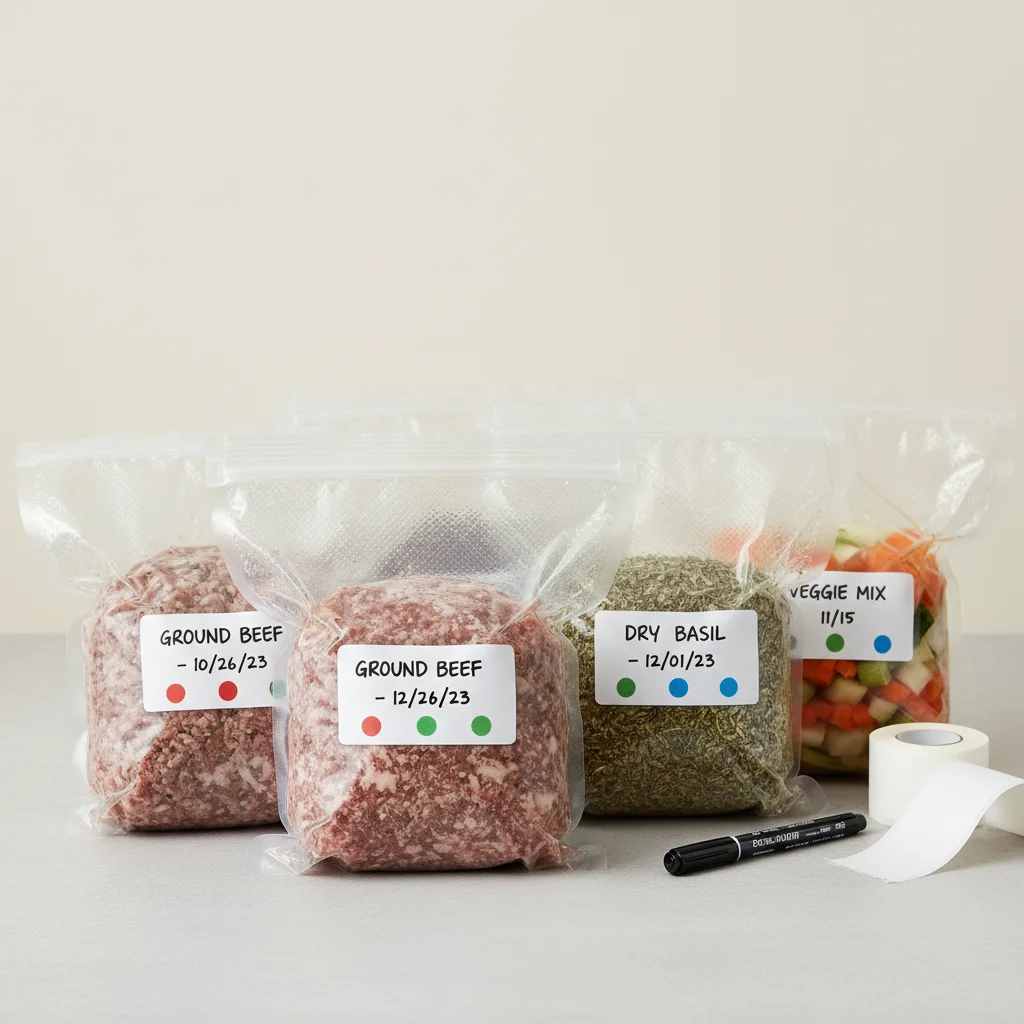
Properly labeling and organizing vacuum sealer bags is crucial for efficient food preservation and minimizing waste. You should always label your vacuum-sealed items with at least three key pieces of information: the food item, the date it was sealed, and the quantity or portion size. This practice ensures you can quickly identify contents, track freshness, and manage your inventory effectively.
Why Labeling is Essential for Food Safety and Organization
Labeling vacuum-sealed food isn’t just about neatness; it’s a critical step in food safety. Without clear labels, it’s easy to forget when an item was sealed, leading to potential spoilage or consumption past its prime. Furthermore, a well-organized freezer or pantry, with clearly labeled bags, saves time and reduces food waste by making it simple to find what you need and use older items first. This system prevents the common problem of mystery meats or forgotten vegetables lurking in the back of your freezer.
Best Practices for Labeling Vacuum Sealer Bags
When it comes to labeling, permanence and readability are key. Use a permanent marker that won’t smudge or fade in cold or moist conditions. Fine-tip markers are excellent for writing detailed information. Consider writing on the bag before sealing, especially if the contents might make the surface uneven after sealing. For items that might be stored for extended periods, writing directly on the bag is often more reliable than adhesive labels, which can sometimes peel off in freezing temperatures.
- Use permanent, freezer-safe markers.
- Label before sealing for flat surfaces.
- Include food item, date sealed, and quantity.
- Consider color-coding for different food types.
- Write clearly and legibly.
Effective Organization Strategies for Vacuum-Sealed Foods
|
Our Picks for the Best Vacuum Sealer in 2026
As an Amazon Associate I earn from qualifying purchases.
|
||
| Num | Product | Action |
|---|---|---|
| 1 | Nesco Deluxe Food VS-12 Vacuum Sealer, 130 Watts, Kit Bags & Viewing Lid, Compact, Silver |

|
| 2 | NutriChef Food Vacuum Sealer Machine - Automatic Air Sealing System for Dry & Moist Foods, LED Touch Controls, Includes Vacuum Bags, Hose & Wine Stopper, High Suction Power, 14"x6"x3", Silver |
|
| 3 | Anybear Vacuum Sealer Machine, 90kPa 120W Wide Seal All-IN-1 Powerful Food Storage, Build-in Cutter | Bags Storage | Digital Countdown Display | 2 Bag Rolls and 5pcs Pre-cut Bags (Gray) |
|
| 4 | Chef Preserve Compact Vacuum Sealer for Food (Vacuum Sealer Machine + 30 Reusable Vacuum Bags) Powerful Handheld Vacuum Sealer Machine, Seal Meal Saver, Portable Food Sealer |
|
| 5 | Mesliese Vacuum Sealer Machine Powerful 90Kpa Precision 6-in-1 Compact Food Preservation System with Cutter, 2 Bag Rolls & 5 Pre-cut Bags, Widened 12mm Sealing Strip, Dry&Moist Modes (Silver) |
|
| 6 | 95kPa Precision Vacuum Sealer Machine, Double Heat Seal for Dry/Moist Food, Easy-Lock Handle, Built-in Bag Storage & Cutter, Progress Display, Pulse Mode, Removable Drip Tray, Silver |
|
| 7 | Food Vacuum Sealer Machine, Powerful & Continuous Vacuum Sealing for Kitchen Storage & Meal Prep, Wet & Dry Food Sealing, Detachable Upper & Lower Design for Easy Cleaning, Includes 50 Bags |
|
| 8 | FoodSaver Vacuum Sealer Machine, Automatic Bag Detection, Sous Vide Friendly, with sealer bags, roll, handheld vacuum sealer, black |
|
| 9 | 90KPa Portable Vacuum Sealer Machine for Food, One-Touch Open Lid, Detachable & Easy to Clean, Vertical Placement Saves Space, Powerful Suction for Freezer Bags & Food Storage |
|
| 10 | FoodSaver PowerVac Compact Vacuum Sealing Machine Stainless Steel & Black Vertical Storage VS0150 | Preserves freshness reduces bag waste for both dry and wet food |
|
Once labeled, organizing your vacuum-sealed bags can further enhance your food preservation efforts. Group similar items together, such as meats, vegetables, or prepared meals. Utilize bins or containers in your freezer to keep categories separate and prevent bags from getting lost or damaged. Stacking flat-sealed bags can maximize space, but ensure they are stable to avoid collapse. Rotating your stock using the ‘first-in, first-out’ (FIFO) method is also vital; place newer items behind older ones to ensure you consume food before it deteriorates.
For those with larger quantities, a simple inventory sheet or digital spreadsheet can be invaluable. This allows you to track what you have, when it was sealed, and when it should ideally be consumed. This level of organization transforms your food storage from a chaotic collection into a streamlined system, saving you money and reducing stress.
Tips for Maximizing Space and Accessibility
Beyond basic labeling and grouping, consider how you can optimize your storage space. For example, sealing liquids or soft foods flat can create uniform packages that stack easily. For items like ground meat, flattening the package before freezing allows for quicker thawing. If you have a chest freezer, vertical dividers can be incredibly helpful in maintaining order and preventing items from becoming buried. Always leave a small amount of space around items in your freezer for air circulation, which helps maintain consistent temperatures.
Another useful tip is to create meal kits. Vacuum seal pre-portioned ingredients for specific meals together. Label these kits clearly with the meal name and date. This not only saves time during meal prep but also ensures you have all components ready when you need them, reducing last-minute trips to the grocery store and minimizing food waste from unused ingredients.
Common Mistakes to Avoid When Labeling and Organizing
One common mistake is using non-permanent markers, which can easily smudge or wash off, rendering your labels useless. Another error is neglecting to include the date, making it impossible to track freshness. Overstuffing freezer bins or stacking bags haphazardly can lead to crushed items, torn bags, and a disorganized mess. Avoid placing unlabeled items into storage, even if you think you’ll remember what they are; memory often fails when faced with a freezer full of opaque bags. Finally, not rotating your stock means older items sit indefinitely, increasing the likelihood of freezer burn or spoilage, even in a vacuum-sealed state.
Get our weekly buyer guide
Practical specs, not advice. Unsubscribe anytime.
