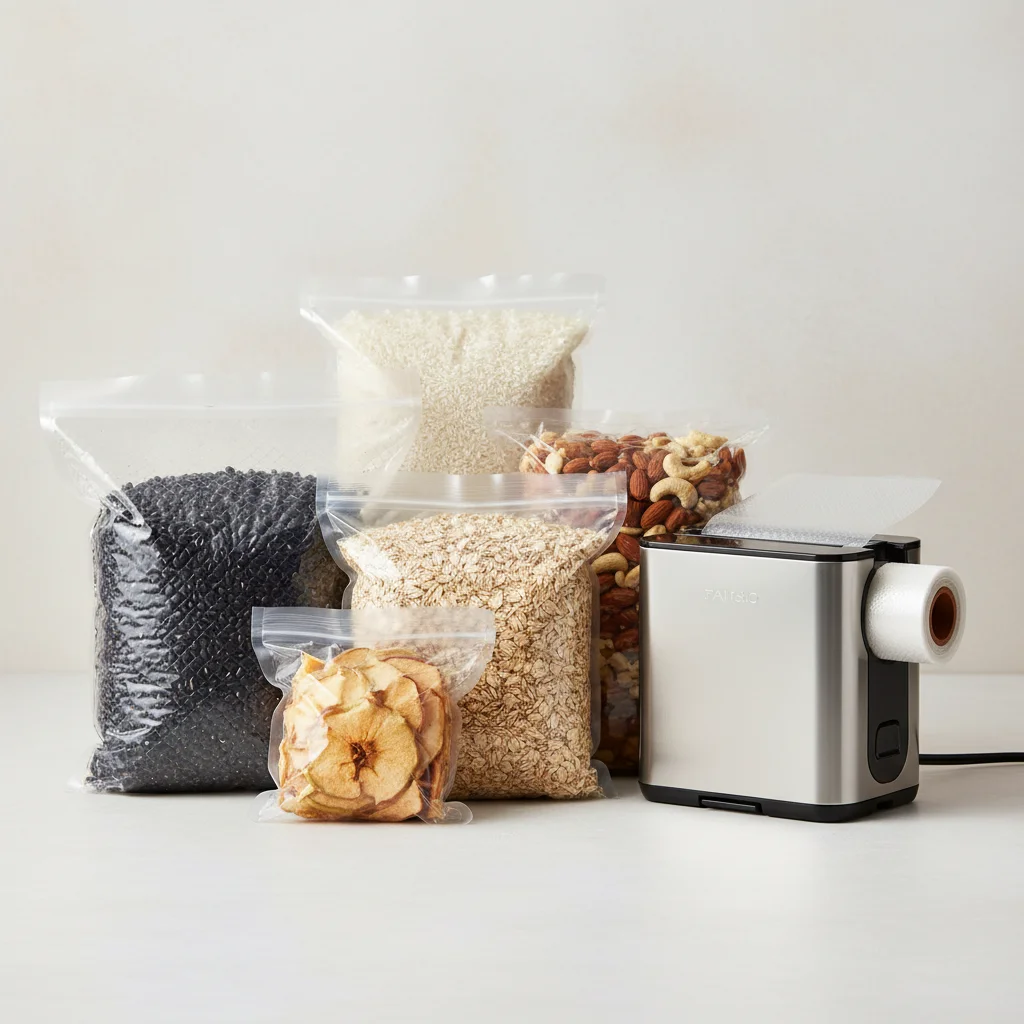
Vacuum sealer bags are an excellent tool for extending the shelf life of dry goods, protecting them from moisture, pests, and oxidation. When stored correctly, dry goods like pasta, rice, beans, and flour can last significantly longer than in their original packaging. The key to long-term preservation lies in proper preparation, sealing, and storage conditions, ensuring your food remains fresh and safe for consumption for up to 5 years or more, depending on the item.
Preparing Dry Goods for Vacuum Sealing
Before vacuum sealing, ensure your dry goods are completely dry and free from any moisture. Even a small amount of moisture can lead to mold growth and spoilage over time. For items like grains or legumes, it’s often beneficial to pre-freeze them for 24-48 hours to kill any potential insect eggs. This extra step provides an additional layer of protection against pantry pests. Always use high-quality, food-grade vacuum sealer bags designed for long-term storage.
Choosing the Right Vacuum Sealer Bags
Not all vacuum sealer bags are created equal. For long-term storage of dry goods, opt for thicker, multi-ply bags that offer superior puncture resistance and a strong oxygen barrier. Bags with an embossed texture are generally better for external vacuum sealers as they allow for more efficient air removal. Consider the size of the bags carefully to minimize wasted space and ensure a tight seal around your food items. Mylar bags, when used in conjunction with a vacuum sealer, offer an even greater barrier against light and oxygen, which can be crucial for very sensitive dry goods.
- Use bags specifically designed for vacuum sealing.
- Select bags with a thickness of at least 3-4 mil for durability.
- Ensure bags are BPA-free and food-safe.
- Consider Mylar bags for enhanced light and oxygen protection.
- Match bag size to the quantity of dry goods to be stored.
The Vacuum Sealing Process for Dry Goods
|
Our Picks for the Best Vacuum Sealer in 2026
As an Amazon Associate I earn from qualifying purchases.
|
||
| Num | Product | Action |
|---|---|---|
| 1 | Nesco Deluxe Food VS-12 Vacuum Sealer, 130 Watts, Kit Bags & Viewing Lid, Compact, Silver |

|
| 2 | Anybear Vacuum Sealer Machine, 90kPa 120W Wide Seal All-IN-1 Powerful Food Storage, Build-in Cutter | Bags Storage | Digital Countdown Display | 2 Bag Rolls and 5pcs Pre-cut Bags (Gray) |
|
| 3 | Food Vacuum Sealer Machine, Powerful & Continuous Vacuum Sealing for Kitchen Storage & Meal Prep, Wet & Dry Food Sealing, Detachable Upper & Lower Design for Easy Cleaning, Includes 50 Bags |
|
| 4 | 95kPa Precision Vacuum Sealer Machine, Double Heat Seal for Dry/Moist Food, Easy-Lock Handle, Built-in Bag Storage & Cutter, Progress Display, Pulse Mode, Removable Drip Tray, Silver |
|
| 5 | NutriChef Food Vacuum Sealer Machine - Automatic Air Sealing System for Dry & Moist Foods, LED Touch Controls, Includes Vacuum Bags, Hose & Wine Stopper, High Suction Power, 14"x6"x3", Silver |
|
| 6 | FoodSaver Vacuum Sealer Machine, Automatic Bag Detection, Sous Vide Friendly, with sealer bags, roll, handheld vacuum sealer, black |
|
| 7 | Chef Preserve Compact Vacuum Sealer for Food (Vacuum Sealer Machine + 30 Reusable Vacuum Bags) Powerful Handheld Vacuum Sealer Machine, Seal Meal Saver, Portable Food Sealer |
|
| 8 | 90KPa Portable Vacuum Sealer Machine for Food, One-Touch Open Lid, Detachable & Easy to Clean, Vertical Placement Saves Space, Powerful Suction for Freezer Bags & Food Storage |
|
| 9 | FoodSaver PowerVac Compact Vacuum Sealing Machine Stainless Steel & Black Vertical Storage VS0150 | Preserves freshness reduces bag waste for both dry and wet food |
|
| 10 | Mesliese Vacuum Sealer Machine Powerful 90Kpa Precision 6-in-1 Compact Food Preservation System with Cutter, 2 Bag Rolls & 5 Pre-cut Bags, Widened 12mm Sealing Strip, Dry&Moist Modes (Silver) |
|
When sealing dry goods, it’s important to prevent fine powders or small particles from being drawn into the vacuum sealer’s pump, which can damage the machine or compromise the seal. A simple trick is to place a coffee filter or a paper towel over the opening of the bag before sealing, acting as a barrier. Alternatively, you can use the ‘pulse’ function on your vacuum sealer to control the vacuum strength and prevent contents from being sucked out. Ensure the seal area is clean and dry before activating the sealing function to achieve an airtight closure.
Optimal Storage Conditions for Sealed Dry Goods
Once vacuum sealed, the storage environment plays a critical role in the longevity of your dry goods. Store sealed bags in a cool, dark, and dry place, such as a pantry, basement, or dedicated food storage area. Consistent temperatures are ideal, as fluctuations can lead to condensation inside the bags, potentially compromising the food. Protect bags from direct sunlight, which can degrade food quality and the integrity of the bags themselves. Label each bag with the contents and the date of sealing for easy inventory management.
Monitoring and Inspection
Even with proper sealing and storage, it’s wise to periodically inspect your vacuum-sealed dry goods. Look for any signs of air leakage, such as a loss of vacuum or a puffed-up bag, which could indicate spoilage. Check for any discoloration, unusual odors, or insect activity. While vacuum sealing significantly reduces these risks, vigilance ensures that your preserved foods remain safe and high-quality for consumption. If you notice any issues, it’s best to discard the contents to avoid health risks.
By following these guidelines, you can effectively use vacuum sealer bags to extend the shelf life of your dry goods, providing a reliable method for long-term food preservation and ensuring you always have staples on hand.
Get our weekly buyer guide
Practical specs, not advice. Unsubscribe anytime.

I’m new to vacuum sealing dry goods, and I found the advice on ensuring everything is completely dry before sealing super helpful. I almost sealed some lentils right after rinsing them, which would have been a disaster! My pasta and rice are now perfectly sealed and I’m excited to see them last for years instead of months.
I’ve been using my vacuum sealer for years, but I never really thought about pre-freezing my grains before sealing them. That tip about killing insect eggs is a game-changer! I always worried about little critters getting into my rice and pasta, even with a good seal. Now I feel much more confident storing my dry goods for the long haul.
The bags work well for keeping moisture out, and my flour definitely lasts longer. My only complaint is that sometimes the seal doesn’t hold perfectly on the first try, especially with bulkier items like beans. I often have to re-seal it a second time to make sure it’s airtight. It’s a minor inconvenience, but something to be aware of.
This is exactly what I needed to read! I’ve been trying to extend the shelf life of my bulk purchases, especially things like oats and quinoa. Knowing that I can keep them fresh for up to 5 years or more with proper sealing is fantastic. It really helps me save money and reduce food waste.