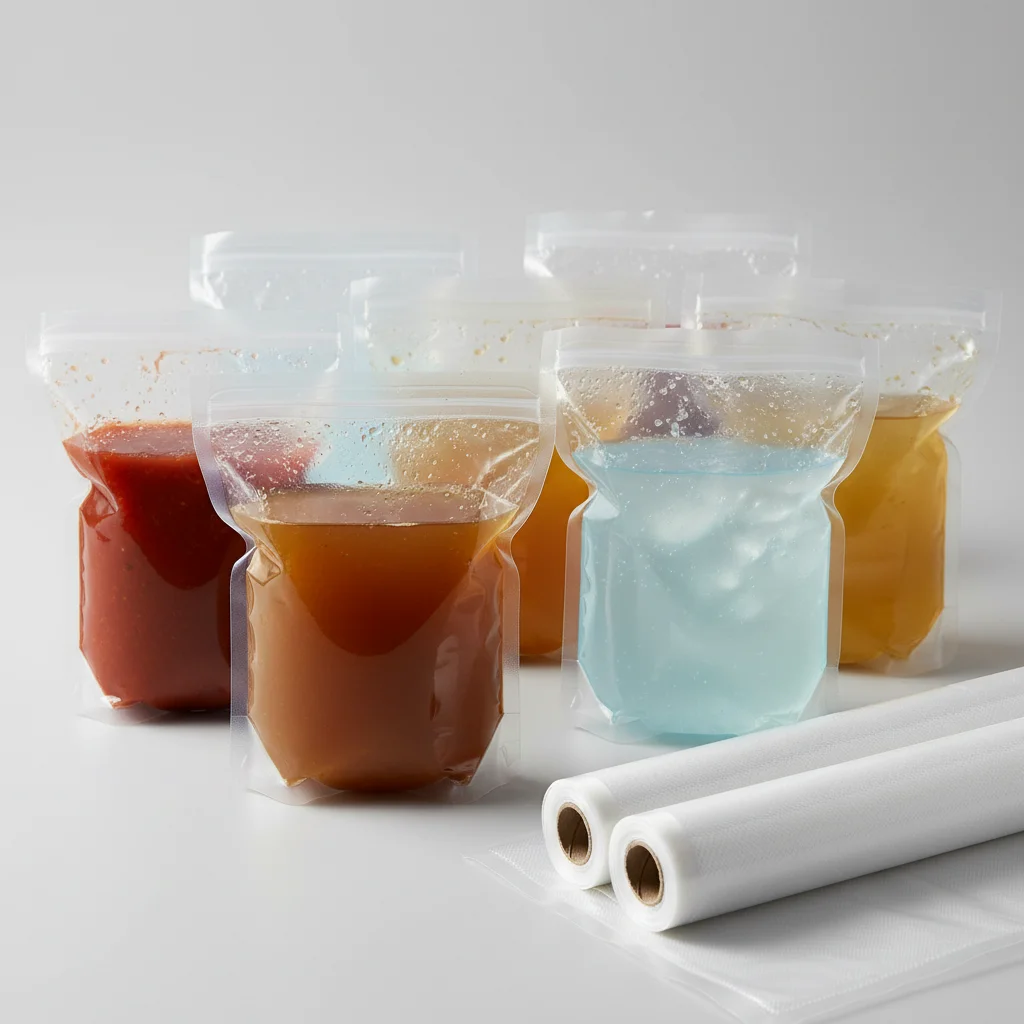
Storing liquids long-term with vacuum sealer bags requires specific techniques to ensure safety and prevent spoilage. The primary method involves pre-freezing liquids into solid blocks before vacuum sealing, which eliminates the risk of liquid being drawn into the machine and compromising the seal. This approach is crucial for maintaining food quality and extending shelf life for items like soups, sauces, and purees.
Why Pre-Freezing Liquids is Essential for Vacuum Sealing
Pre-freezing liquids before vacuum sealing is not just a recommendation; it’s a critical step for successful long-term storage. When liquids are sealed directly, the vacuum process can easily pull the liquid into the sealing chamber, contaminating the machine and creating a weak or incomplete seal. This compromises the food’s safety and significantly reduces its shelf life. Freezing transforms the liquid into a solid, allowing for a clean and secure vacuum seal, much like sealing solid foods.
This method also prevents the formation of ice crystals that can damage the food’s texture and flavor over time. By creating a solid block, the vacuum sealer can remove air more efficiently, minimizing freezer burn and preserving the quality of your stored liquids for up to 1-2 years, depending on the food type.
Step-by-Step Guide to Pre-Freezing and Sealing Liquids
To effectively vacuum seal liquids, follow these steps:
- Pour your liquid into a freezer-safe container, leaving at least one inch of headspace to allow for expansion during freezing.
- Freeze the liquid completely until it forms a solid block. This may take several hours or overnight, depending on the volume.
- Once frozen, remove the solid block of liquid from its container.
- Place the frozen block into a vacuum sealer bag, ensuring there is enough space at the top for a clean seal.
- Vacuum seal the bag according to your machine’s instructions.
This method ensures that your vacuum sealer remains clean and that your liquids are preserved optimally. For best results, use high-quality, puncture-resistant vacuum sealer bags.
Choosing the Right Vacuum Sealer Bags for Liquids
|
Our Picks for the Best Vacuum Sealer in 2026
As an Amazon Associate I earn from qualifying purchases.
|
||
| Num | Product | Action |
|---|---|---|
| 1 | FoodSaver PowerVac Compact Vacuum Sealing Machine Stainless Steel & Black Vertical Storage VS0150 | Preserves freshness reduces bag waste for both dry and wet food |

|
| 2 | NutriChef Food Vacuum Sealer Machine - Automatic Air Sealing System for Dry & Moist Foods, LED Touch Controls, Includes Vacuum Bags, Hose & Wine Stopper, High Suction Power, 14"x6"x3", Silver |
|
| 3 | FoodSaver Vacuum Sealer Machine, Automatic Bag Detection, Sous Vide Friendly, with sealer bags, roll, handheld vacuum sealer, black |
|
| 4 | Nesco Deluxe Food VS-12 Vacuum Sealer, 130 Watts, Kit Bags & Viewing Lid, Compact, Silver |
|
| 5 | Food Vacuum Sealer Machine, Powerful & Continuous Vacuum Sealing for Kitchen Storage & Meal Prep, Wet & Dry Food Sealing, Detachable Upper & Lower Design for Easy Cleaning, Includes 50 Bags |
|
| 6 | Chef Preserve Compact Vacuum Sealer for Food (Vacuum Sealer Machine + 30 Reusable Vacuum Bags) Powerful Handheld Vacuum Sealer Machine, Seal Meal Saver, Portable Food Sealer |
|
| 7 | Anybear Vacuum Sealer Machine, 90kPa 120W Wide Seal All-IN-1 Powerful Food Storage, Build-in Cutter | Bags Storage | Digital Countdown Display | 2 Bag Rolls and 5pcs Pre-cut Bags (Gray) |
|
| 8 | 95kPa Precision Vacuum Sealer Machine, Double Heat Seal for Dry/Moist Food, Easy-Lock Handle, Built-in Bag Storage & Cutter, Progress Display, Pulse Mode, Removable Drip Tray, Silver |
|
| 9 | Mesliese Vacuum Sealer Machine Powerful 90Kpa Precision 6-in-1 Compact Food Preservation System with Cutter, 2 Bag Rolls & 5 Pre-cut Bags, Widened 12mm Sealing Strip, Dry&Moist Modes (Silver) |
|
| 10 | 90KPa Portable Vacuum Sealer Machine for Food, One-Touch Open Lid, Detachable & Easy to Clean, Vertical Placement Saves Space, Powerful Suction for Freezer Bags & Food Storage |
|
Not all vacuum sealer bags are created equal, especially when it comes to storing liquids. Look for bags that are specifically designed for freezer use and are made from durable, multi-layer materials. These bags are less prone to punctures and tears, which is vital for maintaining the integrity of the seal over long periods in the freezer. Bags with an embossed texture can also help with air removal, even with frozen blocks.
Consider the size of the bags as well. It’s often more practical to store liquids in smaller, portion-sized bags, especially if you plan to use them incrementally. This prevents the need to thaw and refreeze large quantities, which can degrade food quality.
Safe Thawing and Reheating of Vacuum-Sealed Liquids
When it’s time to use your vacuum-sealed liquids, proper thawing and reheating are crucial for food safety. The safest way to thaw frozen liquids is in the refrigerator, allowing ample time for them to defrost slowly. For quicker thawing, you can place the sealed bag in a bowl of cold water, changing the water every 30 minutes until thawed.
Avoid thawing at room temperature, as this can promote bacterial growth. Once thawed, liquids can be reheated on the stovetop, in the microwave (if the bag is microwave-safe, or transferred to a microwave-safe container), or in a slow cooker. Always ensure liquids reach an internal temperature of 165°F (74°C) before serving to eliminate any potential pathogens.
Labeling and Organizing Your Stored Liquids
Effective labeling and organization are key to a well-managed freezer. Clearly label each vacuum-sealed bag with the contents and the date it was sealed. This helps you track shelf life and ensures you use older items first. Use waterproof markers or adhesive labels that can withstand freezing temperatures.
Organize your freezer by category, such as soups, broths, or sauces. Stacking flat, frozen blocks can save significant space. Consider using freezer bins or shelves to keep everything tidy and easily accessible. A well-organized freezer not only saves time but also prevents food waste by making it easy to see what you have on hand.
Get our weekly buyer guide
Practical specs, not advice. Unsubscribe anytime.
